Solutions for
- Industries
- Commercial Companies


Organizations collect and process a huge amount of personal data for their daily operations. Most of the time, individuals have little or no awareness about how much of their personal data resides in various organizations’ databases. As an organization stores more and more personal data, its risk of data loss or a data breach goes up. To avoid these security risks, many groups are calling for regulations that:
The General Data Protection Regulation (GDPR) is Europe’s newest data protection law, designed to unify and improve the privacy of personal data across Europe. The GDPR intends to provide European Union (EU) residents with more visibility and control over the way their personal data is collected and processed. May 25 marked the deadline for enterprises worldwide to comply with the provisions of the GDPR. The sweeping regulation from the European Union (EU) is intended to revolutionize the relationships of data holders or processors and the people associated with that data (also known as data subjects). The GDPR protects the personal data of data subjects from the EU, including citizens, visitors and noncitizen residents, regardless of where their data is being held or processed, and penalties for noncompliance can be substantial.
GDPR conformance is a challenge for many enterprises, even ones with no current EU-resident customers or employees. Companies around the world will be affected if they hire employees with EU citizenship (including dual citizenship) — or if they ever develop customer or business-partner relationships involving EU citizens or residents.
But what is one of the hardest parts of getting ready (and maintaining readiness) for the GDPR? Knowing where to start. The obligations the regulation imposes could spark changes in nearly every part of your enterprise — from customer outreach via social media and data protection to archiving transaction records. There are 99 articles and 173 recitals in the GDPR that establish all obligations and requirements that organizations will have to comply with when the GDPR goes into full effect on May 25, 2018.
The GDPR applies to all businesses that:
Once the GDPR is enforced, organizations could face a few different penalties for non-compliance depending on the infraction. Possible consequences include:
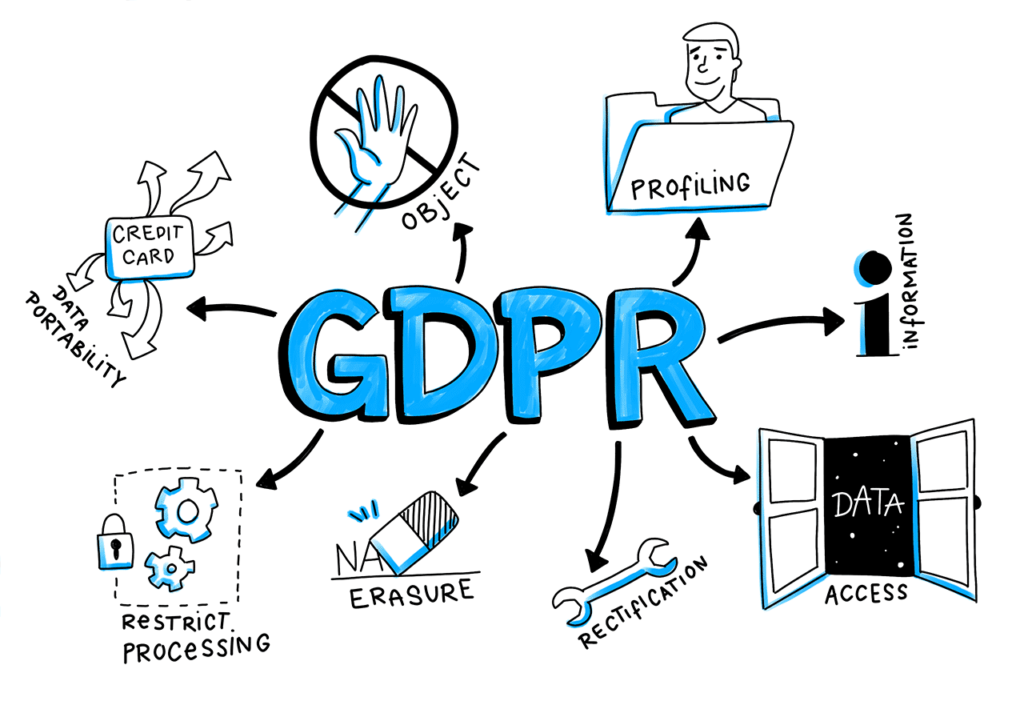
The GDPR focuses on securing and ensuring the privacy of EU citizens’ personal and sensitive personal data. Data, including personal data, is hard to control because it’s dynamic, distributed and in demand. As data grows, changes and multiplies, keeping track of it becomes more difficult. Your business can’t stop to reexamine and classify data every time a customer record is updated. (Learn more about how to accelerate your GDPR efforts.)
In the age of big data analytics, cloud computing and mobile access, organizations can struggle to keep track of all their data sources. Data is increasingly accessible — and in increasingly complex combinations. Due to this, figuring out every place you hold the personal information of even a single EU data subject is an enormous challenge — and with hundreds or thousands of customers, a vastly bigger one.
The GDPR has defined six important principles on how personal data should be processed. It mandates that personal data shall be:
For a regulation as complex as the GDPR, going at it alone can mean wasted time and uncertainty. Software tools, such as Terminus System Ultimate GDPR, can help you face these challenges with higher efficiency and accuracy, at a low cost and with minimal operational overhead — whether your data is on-premises or stored in the cloud.
Wherever you are on the road to GDPR readiness, there are steps you can take to help your enterprise find GDPR personal data, uncover risk and take action.
If you are about to implement a GDPR project, request a technical and financial proposal: