Secure Your Business. Optimize Your Resources. Achieve Excellence.

Why Ultimate Security?

Our comprehensive and agile Information Security Management System model is designed to maximize organizational benefits while minimizing resource expenditure—including time, budget, and human effort. By strategically aligning the ISMS with your business objectives, it unlocks the full potential of your organization’s security.

Ultimate Security defines clear information security objectives, identifies key challenges and drivers, and provides a structured roadmap to assess, prepare, and successfully implement an effective ISMS.

Ultimate Security stands out by:

translating everyday business language into actionable security measures

This unique feature allows users to communicate their security needs in familiar terms, ensuring a seamless and stress-free experience. With Ultimate Security, achieving your security goals has never been easier.

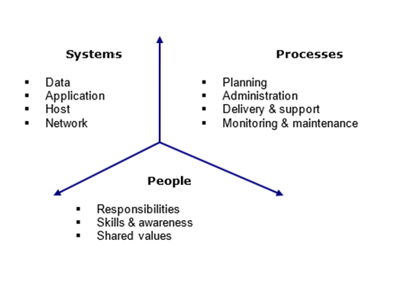
Using this model, we examine the security status of the organization in the following areas:
Our model helps organizations:

  • Strengthen organizational resilience against cyber threats
  • Align security investments with business objectives
  • Reduce financial and operational risk exposure
  • Improve governance and regulatory compliance
  • Optimize security spending through risk-based prioritization
  • Enhance operational efficiency and process integrity
  • Establish measurable and sustainable security performance

"Ultimate Security: Where Business Meets Security."

Its Features

The methodology is characterized by four core features:

  1. Process-Oriented
    Unlike generic approaches, this methodology integrates directly with business processes. This connection:
    • Facilitates measuring the effectiveness of security measures
    • Enhances personnel engagement by linking their daily activities to ISMS objectives
    • Reduces process risks, improving business operations
  2. Excerpt-Oriented
    Applying the Pareto principle, the methodology focuses on the 20% of processes that generate 80% of the potential benefits. While all processes are considered, priority is given to key areas, making implementation faster, cost-effective, and impactful.
  3. Profit-Oriented
    The methodology emphasizes tangible business value, addressing common misconceptions:
    • ISMS as a prestige or certification exercise
    • ISMS without practical benefits
  4.   Cycle-Oriented

           Following a cyclical improvement philosophy (Deming’s PDCA approach), ISMS implementation is iterative. Each cycle:

    • Reviews organizational status
    • Analyzes results from the previous cycle
    • Develops a new plan for security improvement
    •  

This approach ensures continuous enhancement of security aligned with evolving

Philosophy of the Methodology

At the core of our methodology is a simple principle: protect your most valuable asset—data—while maximizing business value.

We consider all forms of data—digital, physical, and human knowledge—and address their full lifecycle:

  • At Rest: Stored on devices, servers, or cloud
  • In Transit: Moving across networks, applications, or cloud services
  • In Process: Actively used in systems, applications, or cloud compute


Our approach is risk-driven and benefit-focused, applying the right controls to ensure confidentiality, integrity, and availability without overcomplicating implementation.
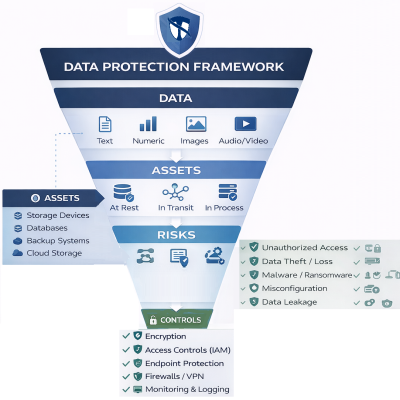
Data Protection Model

Why It Works:

  • Holistic: Covers people, processes, and systems
  • Practical: Focuses on key areas that deliver maximum impact
  • Agile: Adapts to organizational needs and resources
  • Value-Oriented: Aligns information security with business goals

How It’s Applied

Now, the important question is “What controls should we use for our case”?

To answer this question and design RTP (Risk Treatment Plan), this model is using all possible tools and facilities, including:

  • Security Domains → define scope (WHAT to secure)
  • Security Principles → define behavior (HOW to think)
  • Framework / Standards → define requirements / specifications (WHAT must exist)
  • Guidance / Baselines → define configuration (HOW to configure)
  • Best Practices → enforce protection (HOW to implement)
  • Models → ensure operation (HOW to operate daily)

We integrate security domains, principles, frameworks, guidance, and best practices to create a tailored security program that is measurable, sustainable, and continuously improving.

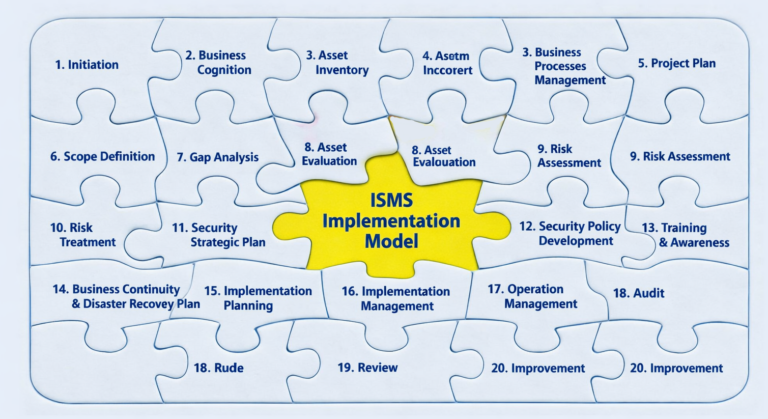
Within Ultimate Security, security implementation follows a structured decision chain that transforms business intent into operational protection. Starting from the business need, the 20-step ISMS process defines a systematic path for implementation.

“Speak Business. Think Security.”

This process determines the appropriate security domains that define the scope of protection.
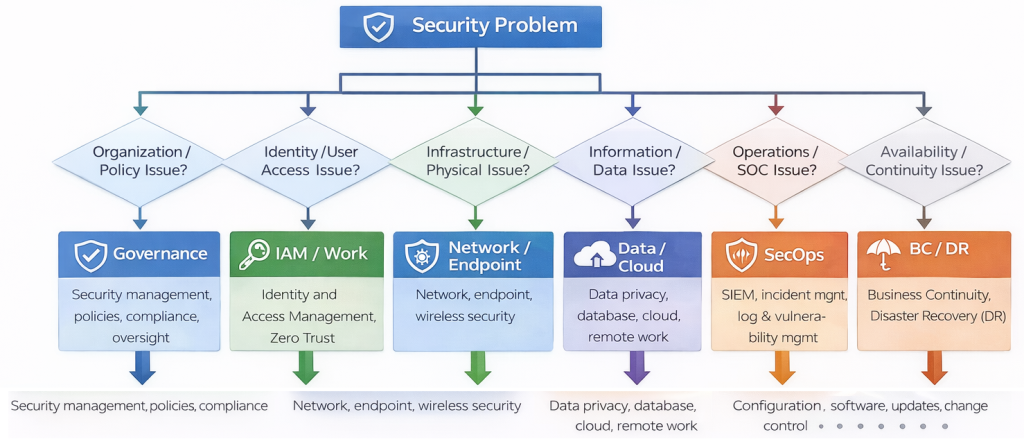
Each domain applies one or more security principles that provide decision logic and guide design choices. These principles and domains are then translated into formal standards and frameworks—such as ISO/IEC 27001 or NIST Cybersecurity Framework—which define required controls and compliance expectations. From these requirements, organizations derive guidance and baselines that specify technical configurations and architectural settings.

Each guidance baseline can generate multiple best practices that define operational procedures and execution methods, ultimately resulting in implemented security controls.
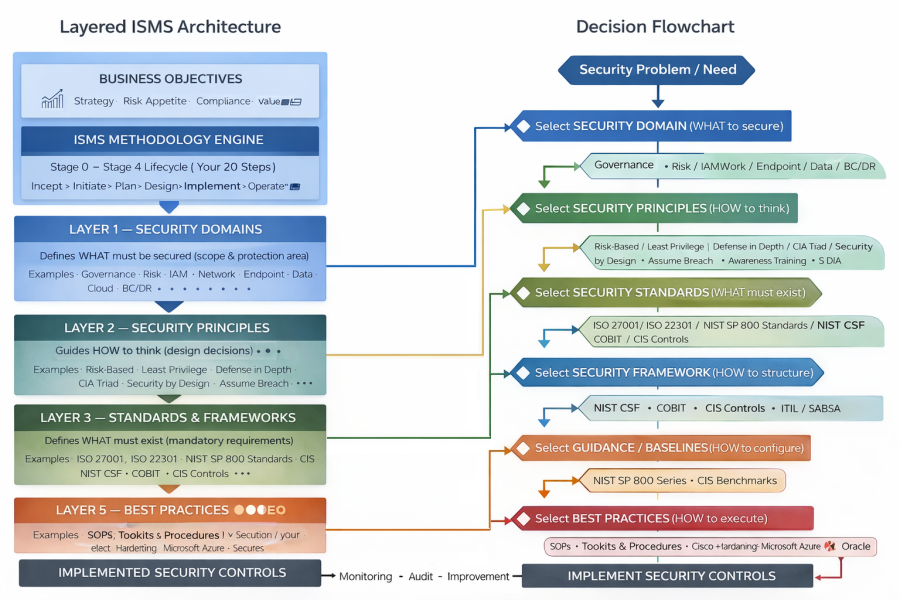
Layered Architecture

The relationships between these elements are dynamic and many-to-many: a single domain may relate to multiple principles and multiple frameworks or standards; one principle may map to several guidance or baseline configurations; a framework can also produce multiple guidance sources; and each guidance baseline may lead to several best practices.

This layered and interconnected structure ensures flexibility, consistency, and alignment between business objectives, risk management decisions, and practical security implementation.
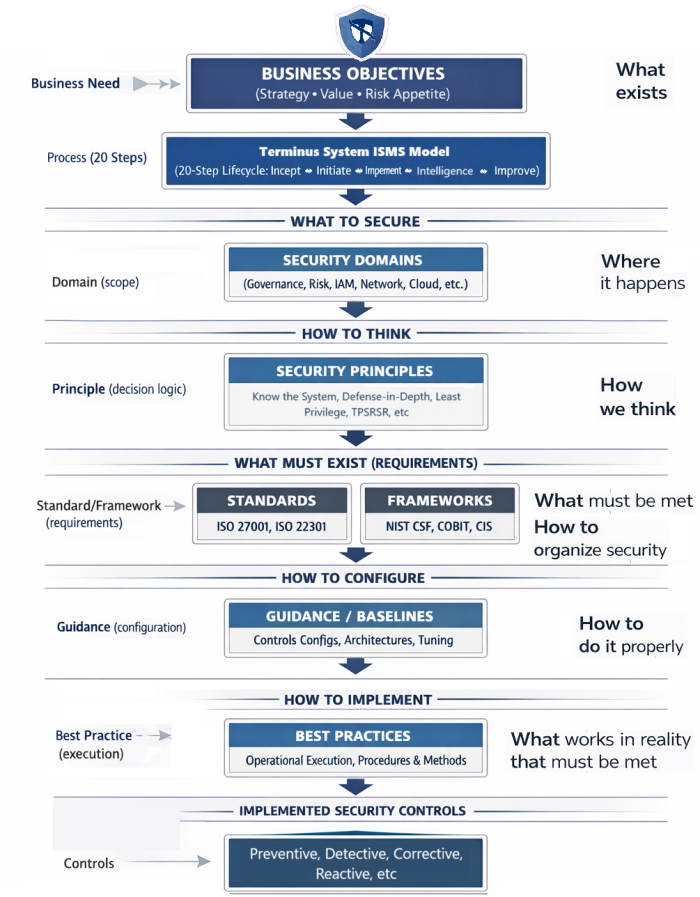
Elements Structure

The 20-Step Journey to Security Excellence

Our model is a multi-layered, end-to-end framework based on PPDIOO (Prepare, Plan, Design, Implement, Operate, Optimize), aligned with the Deming Cycle, and covering all approaches to information security management. It consists of 1 primary stage (2 phases, 7 steps) and 4 main stages (6 phases, 20 steps). Each step contains key activities to ensure practical, measurable results.

Do I need to go to this jurney?

Many CEOs and CISOs believe their organization is already “secure enough.” But in today’s threat landscape, hidden vulnerabilities can exist even in mature environments — often without being noticed until it’s too late.

Before investing in a full security program, you need clarity:
Do you really need to strengthen your security posture? How exposed is your business today?

Stage 0 is designed to give you clear, objective answers.

Using our Security Posture Self-Assessment Toolkit, you will:

  • Reveal hidden security gaps that could put your business at risk

  • Understand your true level of protection, not just perceived security

  • Evaluate the potential financial and operational impact of unresolved vulnerabilities

  • Determine how urgent security improvements are for your organization

This stage provides practical insights and measurable results, helping you make confident, informed decisions about your security strategy — before risks turn into incidents.

Know your exposure. Understand your risk. Take action with confidence.

Stage 0 - Inception
Phase 0.1 - Security Justification
Step 0.1.1

Executive Security Posture Assessment: Evaluate current security status across domains.

Total Loss Estimator: Estimate potential financial losses from security gaps.

Implementation Urgency: Assess urgency and prioritize improvements

Step 0.2.1

Project Definition: Define high-level objectives and alignment with business priorities.

Boundary Definition: Determine project scope and limits.

Security Domains Posture Assessment: Evaluate in-depth status of targeted security domains.

Readiness Assessment: Confirm organization’s readiness to undertake ISMS implementation.

So, Let's Go

If your assessment reveals opportunities to strengthen your security posture — or identifies gaps across critical domains — now is the time to take action.

Security is not a one-time effort, but a continuous journey toward resilience, trust, and business protection. By moving forward, you take control of your risks, reduce potential losses, and build a stronger, more secure organization.

Together, we will:

  • Prioritize the areas that need improvement

  • Strengthen your security across key domains

  • Implement practical and effective protections

  • Guide your organization toward a mature and resilient security posture


Your journey to stronger security starts here. Let’s move forward with confidence.
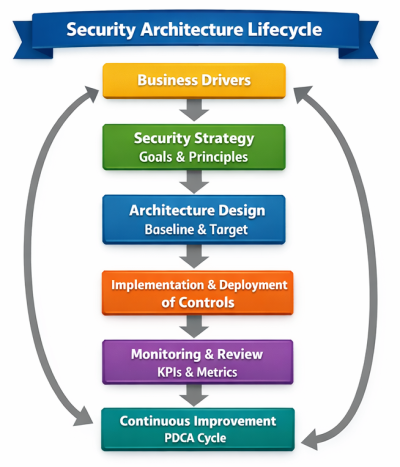
Implementation Plan
Stage 1 - Initiation
Phase 1: Prepare - Establishes foundational understanding of the organization and assets.
Step 1 - Setup

Assess readiness, challenges, and information availability.

Map organizational structure, goals, strategies, and obligations.

Identify all assets (information, hardware, software, human resources, infrastructure, intangible).

Document, map, and analyze all business processes.

Step 5 - Project Plan

Allocate resources, define tasks, timing, and deliverables.

Determine project scope, stakeholders, and interdependencies.

Identify gaps between current and target security states.

Quantify asset value and role in achieving business goals

Phase 3: Design - Sets the framework for ISMS deployment, ensuring alignment with organizational goals.
Step 9 - Risk Assessment

Identify, analyze, and evaluate risks to assets.

Define solutions and mitigation plans for unacceptable risks.

Develop long-term strategy and objectives.

Establish policies, procedures, and technical guidelines.

Define role-based training and awareness programs.

Identify critical services, recovery objectives, and DR strategy.

Step 15 - Implimentation Planning

Plan rollout of technical and organizational controls.

Oversee execution and ensure compliance with strategic plan

Phase 5: Operate - Monitors and manages security operations.
Step 17 - Operation Management

Maintain security controls, monitor performance, and respond to incidents.

Phase 6: Optimize - Continuously evaluates and enhances the ISMS.
Step 18 - Audit

Evaluate compliance, performance, and effectiveness.

Review metrics, incidents, and lessons learned.

Implement corrective actions and optimize security posture.
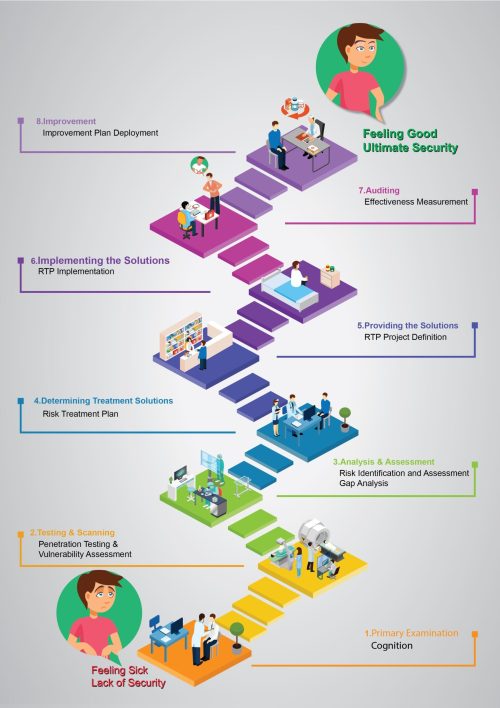
Medical Methodology

Ultimate Security covers everything in information security, including:

  • 27 Security Domains
  • 16 Security Principles
  • 85 Security Standards
  • 45 Security Frameworks
  • 30 Security Guidance
  • And Best Practices

And much more …

  • 1 Information Security Governance
  • 2 Security Organization
  • 3 Security Policies & Procedures
  • 4 Risk Management
  • 5 Asset Management
  • 6 Personnel Security
  • 7 Physical Security
  • 8 Third-Party Security
  • 9 Vulnerability Management
  • 10 Threat Intelligence
  • 11 Identity & Access Management
  • 12 Education & Awareness
  • 13 Audit & Compliance
  • 14 Privacy Management
  • 15 Security Operations
  • 16 Wireless Security
  • 17 Application / Software Security
  • 18 Endpoint Security
  • 19 Cloud Security
  • 20 Network Security
  • 21 Monitoring & Log Management
  • 22 Incident Management
  • 23 Malware Protection
  • 24 Cryptography
  • 25 Configuration & Change Management
  • 26 Business Continuity & Disaster Recovery
  • 27 Data Security
  • 1 Know the System
  • 2 Defense-in-Depth
  • 3 Least Privilege
  • 4 Need-to-Know
  • 5 TPSRSR
  • 6 Security by Design
  • 7 Fail-Safe Defaults (Default Deny)
  • 8 Least Common Mechanism
  • 9   Assume Breach
  • 10 Minimize Attack Surface
  • 11 Secure by Default
  • 12 Keep Systems Updated (Patch Management)
  • 13 Encryption Everywhere
  • 14 Avoid Security Through Obscurity
  • 15 Prevention Is Ideal, But Detection Is A Must
  • 16 Awareness and Training

ISO/IEC 27000 Family

  • ISO/IEC 27001:2022
  • ISO/IEC 27002:2022
  • ISO/IEC 27003:2017
  • ISO/IEC 27004:2023
  • ISO/IEC 27005:2023
  • ISO/IEC 27006:2023
  • ISO/IEC 27007:2023
  • ISO/IEC 27008:2023
  • ISO/IEC 27009:2023
  • ISO/IEC 27010:2023
  • ISO/IEC 27011:2023
  • ISO/IEC 27012:2023
  • ISO/IEC 27013:2023
  • ISO/IEC 27014:2023
  • ISO/IEC 27015:2023
  • ISO/IEC 27016:2023
  • ISO/IEC 27017:2023
  • ISO/IEC 27018:2023
  • ISO/IEC 27019:2023
  • ISO/IEC 27020:2023
  • ISO/IEC 27021:2023
  • ISO/IEC 27022:2023
  • ISO/IEC 27023:2023
  • ISO/IEC 27024:2023
  • ISO/IEC 27025:2023
  • ISO/IEC 27026:2023
  • ISO/IEC 27027:2023
  • ISO/IEC 27028:2023
  • ISO/IEC 27029:2023
  • ISO/IEC 27030:2023
  • ISO/IEC 27031:2023
  • ISO/IEC 27032:2023
  • ISO/IEC 27033:2023
  • ISO/IEC 27034:2023
  • ISO/IEC 27035:2023
  • ISO/IEC 27036:2023
  • ISO/IEC 27037:2023
  • ISO/IEC 27038:2023
  • ISO/IEC 27039:2023
  • ISO/IEC 27040:2023
  • ISO/IEC 27041:2023
  • ISO/IEC 27042:2023
  • ISO/IEC 27043:2023
  • ISO/IEC 27044:2023
  • ISO/IEC 27045:2023
  • ISO/IEC 27046:2023
  • ISO/IEC 27047:2023
  • ISO/IEC 27048:2023
  • ISO/IEC 27049:2023
  • ISO/IEC 27050:2023

Other ISO/IEC Related Standards

  • ISO/IEC 22301
  • ISO/IEC 24762

NIST Standards

  • FIPS 140 Series
  • FIPS 199
  • FIPS 200

Security Standards for Industries

Power Industry

  • ISA/IEC 62443
  • IEC 62210
  • IEC 62351
  • IEC 62056
  • IEC 61850
  • IEC 61400-25
  • IEEE 1402
  • IEEE 1686
  • IEEE P1711
  • IEEE C37.240
  • IEEE P2030
  • NISTIR 7628
  • ISO/IEC 13335-1
  • ISO/IEC 15408
  • North American Electric Reliability Corporation (NERC)

Financial Systems

  • ISO 9564-1:2017
  • ISO/CD 9564-5
  • ISO/CD 11568
  • ISO 13491
  • ISO/AWI TR 14742
  • ISO/AWI 16609
  • ISO/TR 19038
  • ISO/AWI 19092
  • ISO 20038
  • ISO 21188
  • ISO/TR 21941
  • ISO/DIS 23195
  • ISO/AWI TS 23526
  • ISO/WD 24374

Healthcare

  • HIPAA

Risk Management Frameworks

  • NIST RMF — SP 800-37
  • NIST AI RMF
  • OCTAVE
  • FAIR
  • MITRE ATT&CK — From Risk Understanding to Security Governance

Program & Governance Frameworks

  • NIST Cybersecurity Framework (CSF)
  • COBIT
  • COSO
  • ENISA — From Governance to Control

Control Frameworks

  • MITRE ATT&CK
  • FISMA
  • PAS 555
  • Open SAMM
  • SANS Critical Security Controls — From Control to Compliance

Compliance & Privacy Frameworks

  • GDPR
  • SOC 1
  • SOC 2
  • SOC 3
  • PCI DSS
  • PIPEDA
  • HIPAA
  • GLBA
  • DFS
  • FedRAMP
  • NIST Privacy Framework
  • NIST SP 800-122
  • NIST SP 800-144
  • NIST SP 800-53 Rev 5
  • AICPA Generally Accepted Privacy Principles
  • FERPA
  • CCPA / CRPA
  • COPPA
  • FDPA
  • MTSA
  • SOX

Identity & Access Management Frameworks

  • NIST SP 800-63
  • NIST SP 800-162
  • NIST SP 800-178
  • NIST SP 800-192
  • FIDO2 (Fast Identity Online)
  • Zero Trust

Incident Response Frameworks

  • SANS Incident Response Framework
  • NIST SP 800-86
  • NIST SP 800-83
  • NIST SP 800-101

Foundational Principles & Philosophy

  • NIST SP 800-12 — Intro to Information Security
  • NIST SP 800-14 — Generally Accepted Security Principles

Program Planning & Documentation Guidance

  • NIST SP 800-18 — System Security Plans
  • NIST SP 800-34 — Contingency Planning
  • NIST SP 800-30 — Risk Assessments
  • NIST SP 800-39 — Managing Security Risk
  • NIST SP 800-60 — Mapping Information to Categories
  • NIST SP 800-160 — Cybersecurity Lifecycle

People & Process Operation Guidance

    • NIST SP 800-16 — Training Requirements
    • NIST SP 800-50 — Awareness Program
  • NIST SP 800-35 — Security Services
  • NIST SP 800-61 — Incident Handling
  • NIST SP 800-92 — Log Management
  • ITIL — IT Service Management

Technical Implementation Guidance

  • CIS Security Controls Guidance
  • NIST SP 800-53 — Security Controls
  • NIST SP 800-128 — Configuration Management
  • NIST SP 800-70 — National Checklist Program
  • NIST SP 800-81 — Secure DNS
  • NIST SP 800-44 — Securing Web Servers
  • IST SP 800-95 — Secure Web Services
  • OWASP — Application Security

Measurement, Assessment & Governance Guidance

  • NIST SP 800-55 — Performance Measurement
  • NIST SP 800-100 — Security Handbook
  • NIST SP 800-53A — Control Assessment
  • NIST SP 800-88 — Media Sanitization

Sector / Domain Guidance

  • AWWA G430 — Water Security
  • PCI SSC Guidance — Payment Data Protection
  • NIST SP 800-171 — Controlled Unclassified Info
  • NIST SP 800-82 — Industrial Control Systems

Cisco

Microsoft

Oracle

This model is: 

  • Comprehensive— Covers all security domains, principles, standards, frameworks, best practices
  • Agile— Adapts to your organization’s capacity and resources
  • Efficient— 20-80 principle ensures maximum ROI
  • Business-Aligned— Profit-oriented, value-driven approach
  • Proven— Based on international best practices and standards
  • Continuous— Built on the Deming cycle for ongoing improvement
  • Risk-Focused— Addresses data at rest, in transit, and in process


Who Benefits

  • Enterprise organizations
  • Government agencies
  • Financial institutions
  • Technology companies
  • Critical infrastructure providers
  • Regulated industries

Transform Your Security Posture Today

"Achieve Security Goals Effortlessly with Ultimate Security."

Move from security as a cost center to security as a business enabler. Our methodology provides the roadmap, tools, and framework to achieve information security excellence while optimizing your resource investment.

Contact Terminus System to begin your ISMS journey, and Unlocking the Full Potential of Your Organization's Security

If you are about to implement an ISMS or any Information Security Enhancement project to improve your current information security posture, request us a technical and financial proposal: